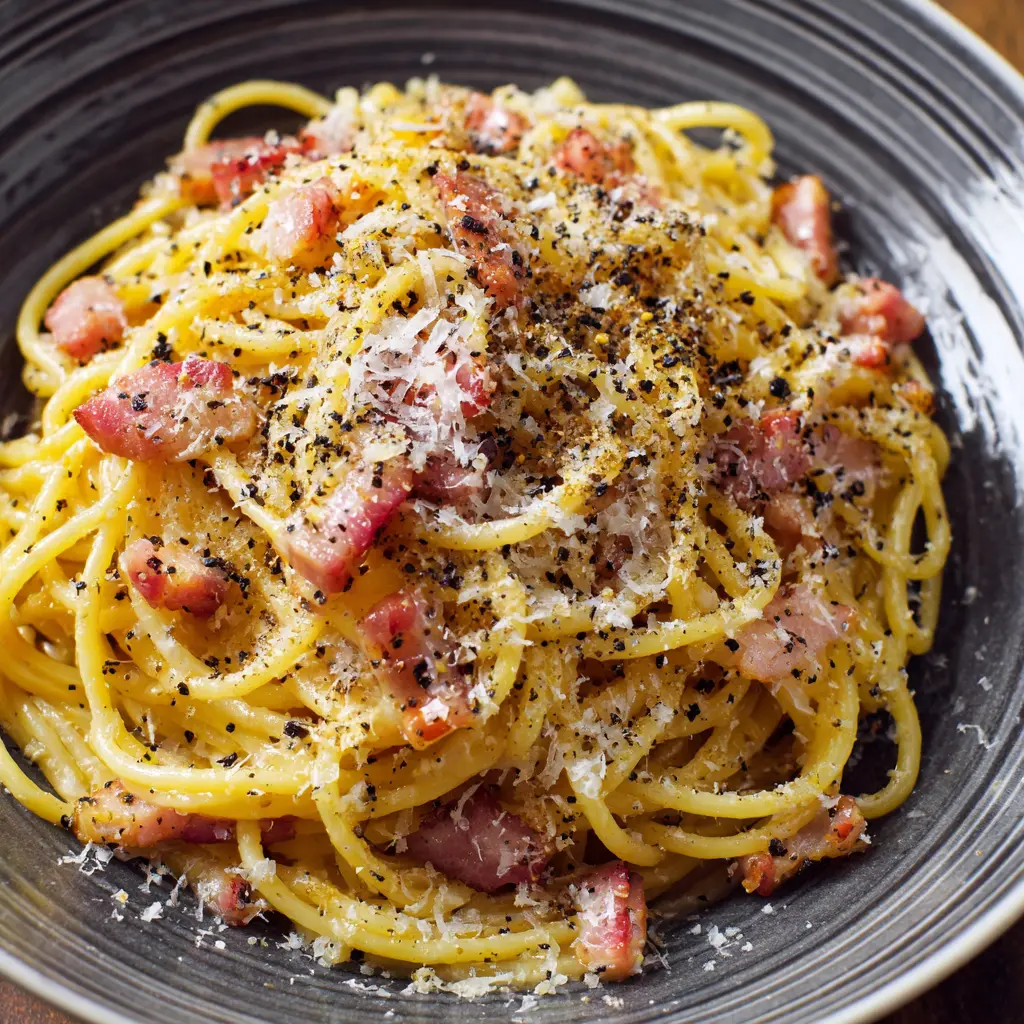
Embrace the heart of Roman cuisine with Pasta alla Gricia, a simple yet deeply flavorful dish that predates even the famous carbonara. This rustic pasta combines crisp guanciale, sharp Pecorino Romano, and fragrant black pepper into a luxurious sauce that clings perfectly to every strand of spaghetti or tonnarelli.
Perfectly balancing savory, creamy, and peppery notes, this traditional recipe celebrates the quality and simplicity of each ingredient, delivering an unforgettable Italian experience in under 30 minutes.
- Minimal ingredients deliver maximum authentic Italian flavors.
- Quick to prepare yet impressively rich and satisfying.
- Uses traditional guanciale for unmatched taste and texture.
Ingredients
- Black Pepper: Freshly ground medium-coarse for a sharp, aromatic spice that enhances the dish deeply.
- Pecorino Romano Cheese: Finely grated, salty and tangy sheep’s milk cheese to add creamy texture and bold flavor.
- Guanciale: Authentic pork jowl cured meat, cut into strips for crispy, fatty richness that infuses the pasta.
- White Wine: Dry white wine to deglaze the pan and create a subtle acidic balance to the fat.
- Spaghetti or Tonnarelli: Long, firm pasta strands ideal for coating with the luscious sauce.
- Salt: Added to boiling water to properly season pasta without overpowering the sauce.
- Pasta Water: Reserved starchy cooking water used to emulsify and bind the sauce beautifully.
Instructions
- Cook the Pasta Until Al Dente
-
Bring a large pot of salted water to a rolling boil and add your pasta. Cooking it al dente preserves firmness and texture, essential for proper saucing. Reserve about a cup of pasta water before draining to add starch and moisture to the sauce.
- Sauté the Guanciale for Crispy Perfection
-
Place the guanciale strips in a large pan over medium heat. Render the fat slowly until the meat is golden and crisp, approximately 5 to 7 minutes. This fat forms the flavorful base of the sauce; remove excess if it becomes overwhelming but keep enough for taste.
- Deglaze the Pan with White Wine
-
Pour the white wine into the pan to loosen all the caramelized bits stuck to the bottom. Let it simmer and reduce by half over 2 to 3 minutes, concentrating flavor and adding a subtle brightness to the dish.
- Combine the Pasta and Guanciale Sauce
-
Add the drained pasta straight to the pan. Toss thoroughly to ensure every strand is coated in the rendered guanciale fat and wine reduction. Add a splash of reserved pasta water to help the sauce emulsify and cling to the noodles.
- Incorporate Pecorino Romano and Black Pepper
-
Lower the heat to prevent curdling. Gradually sprinkle in grated Pecorino Romano and freshly cracked black pepper, tossing quickly to combine. Adjust with more pasta water as needed to create a creamy, glossy sauce without any cream.
- Serve Immediately with Extra Cheese and Pepper
-
Plate the pasta at once to enjoy its perfect texture and heat. Garnish with additional Pecorino and black pepper for an extra punch of flavor and spice, delivering a classic Italian experience.
- Always add cheese off the heat to avoid clumping and graininess.
- The creamy sauce results from a delicate balance of pasta water, cheese, and rendered fat.
- Guanciale offers a distinctive flavor superior to pancetta, though pancetta is a suitable substitute.
Storage Tips
Store any leftovers in an airtight container in the refrigerator for up to 2 days. Reheat gently with a splash of pasta water to restore the creamy sauce texture.
Serving Suggestions
Pair this pasta with a crisp green salad and a glass of dry white wine. Serve alongside crusty bread to soak up any remaining sauce, creating a well-rounded traditional Roman meal.
- Use tonnarelli for an authentic Roman texture if available instead of spaghetti.
- Control the heat carefully when combining cheese to achieve a smooth, silky sauce.
- Render guanciale fat slowly over medium heat to maximize flavor without burning.
FAQs
- Can I substitute pancetta for guanciale?
-
Yes, pancetta works as a substitute but guanciale provides a richer, more authentic flavor and texture.
- Why no cream in the sauce?
-
The creamy texture comes from emulsifying pasta water, fat, and Pecorino; cream would overpower the traditional profile.
- What pasta types best suit this dish?
-
Spaghetti or tonnarelli are ideal as their shape holds the sauce perfectly, but other long, thin pasta can work too.
- How do I prevent the cheese from clumping?
-
Add cheese off the heat and toss quickly while adding pasta water gradually to maintain a smooth sauce.
- Can Pasta alla Gricia be made vegan?
-
This recipe relies on cured pork and cheese; for vegan versions, use plant-based alternatives but the flavor profile changes significantly.
- How important is freshly ground black pepper?
-
Freshly ground pepper adds critical aroma and spice character that pre-ground pepper lacks, elevating the dish notably.
- Is it necessary to reserve pasta water?
-
Absolutely. The starchy pasta water is vital to create the emulsified sauce that clings to the noodles beautifully.
Authentic Pasta alla Gricia
Equipment
- 1 large pot for boiling pasta
- 1 large pan for cooking guanciale and sauce
Ingredients
- 1 tablespoon black pepper freshly ground (medium coarse)
- 6 ounces Pecorino Romano cheese finely grated
- 6 ounces guanciale or pancetta, cut into strips
- ½ cup white wine
- 11 ounces spaghetti or tonnarelli
Instructions
- Bring a large pot of salted water to a boil and cook pasta until al dente. Reserve 1 cup of pasta water and then drain.
- Cook guanciale in a large pan over medium heat until crispy and golden, about 5 to 7 minutes. Remove excess fat if necessary.
- Deglaze the pan with white wine and simmer for 2 to 3 minutes until slightly reduced.
- Add the drained pasta to the pan and toss to coat in guanciale fat and sauce. Add reserved pasta water to emulsify.
- Lower the heat and gradually stir in Pecorino Romano and black pepper, tossing quickly to combine. Add more pasta water as needed to create a creamy sauce.
- Serve immediately with extra Pecorino Romano and black pepper on top.
Notes
- Use guanciale for authentic flavor instead of pancetta.
- Add cheese off heat to prevent clumping.
- The creamy sauce forms from emulsifying pasta water with cheese and rendered fat.
- Leftovers can be refrigerated and reheated gently.